Screen-Free Afternoons: A Simple Coloring Routine for Kids
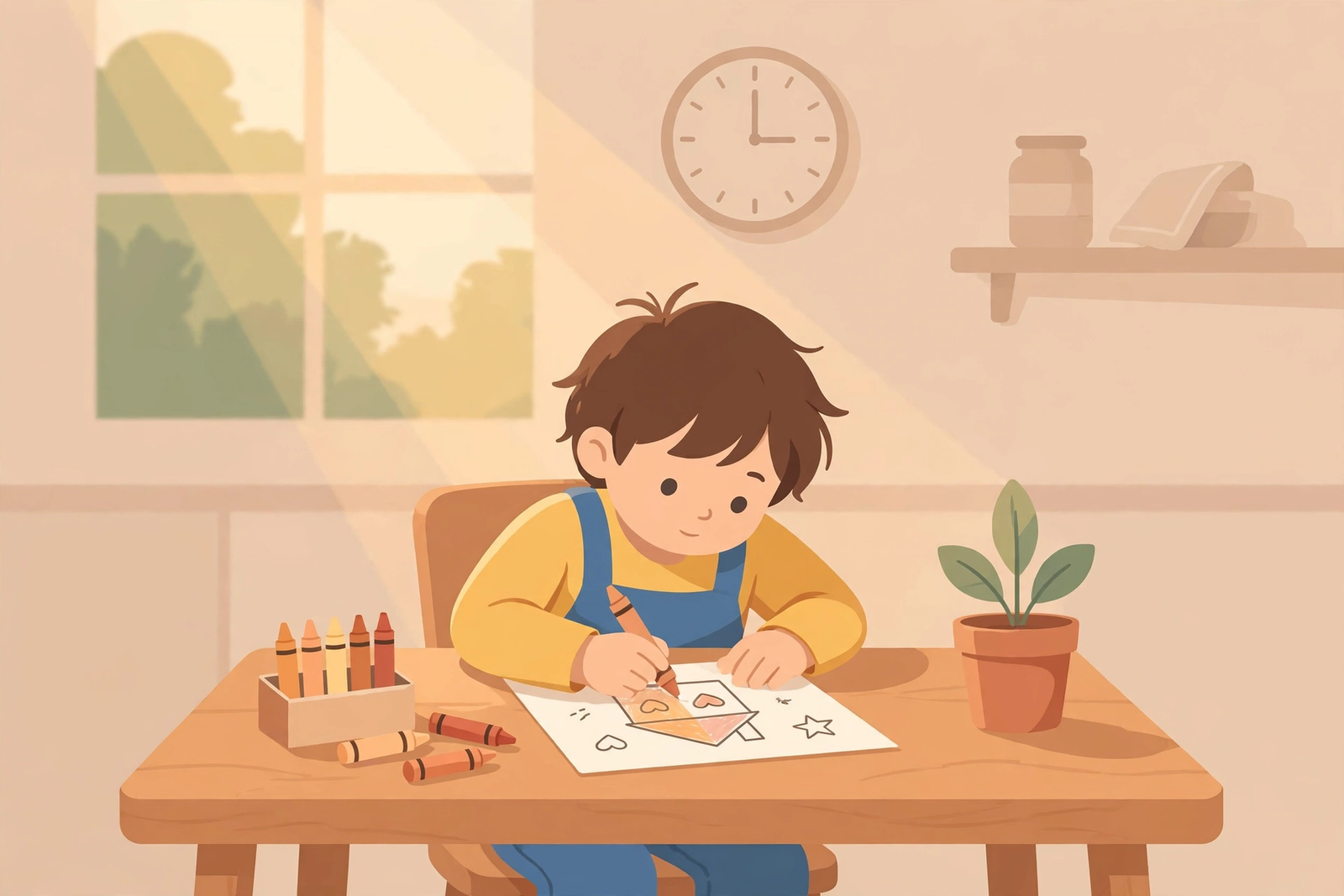
Small, repeatable, and low-effort — that's what makes a routine stick.
Most "screen-free" advice fails for the same reason: it relies on willpower in the moment, usually right when everyone's tired. A routine works better because it removes the decision. Coloring is a near-perfect anchor for a screen-free stretch — it's cheap, quiet, portable, and genuinely calming. Here's a simple, low-effort rhythm that makes it a habit rather than a daily negotiation.
Pick one reliable time
Habits attach to existing moments. Choose a slot that already happens every day — right after school, the half hour before dinner, or the wind-down before bath — and let coloring live there. Consistency matters more than length; ten predictable minutes beat an occasional hour. Because it's the same time each day, kids stop resisting it and start expecting it, the same way they do a bedtime story.
Set up a grab-and-go station
The enemy of any routine is friction. Keep a small basket with a few printed pages, crayons, and colored pencils somewhere the child can reach it themselves. Pre-print a little stack so there's never a "wait while I find the printer" gap that kills the moment. Rotate the pages every week or two — a fresh animal, vehicle, or fantasy page — so the basket always has something new-ish to reach for.
The formula: same time, zero setup, easy first page. Remove every excuse and the routine runs itself.
Start with an easy win
Open each session with a page the child can succeed at quickly — a bold, simple design finishes fast and creates the good feeling that makes them want to keep going. Save detailed pages for when they're already absorbed. Matching the page to the moment is its own small skill, and our guide to picking the right page pairs neatly with building a routine.
Color alongside them (sometimes)
You don't have to, but it helps. Coloring your own page for a few minutes signals that this is a real activity, not a holding pen while you check your phone. It's also a low-pressure way to be together and talk. Grown-ups get the same calming benefit — a mandala is a lovely parallel activity while a child works on their animals. On busy days, just being nearby is enough.
Keep it fresh and pressure-free
Routines die when they get stale or start to feel like homework. Keep novelty coming with new themes, occasional "color a card for someone" missions (see turning pages into gifts), and reusable laminated sheets for variety without more printing. And never make it about neatness or finishing — the goal is a happy, screen-free half hour, not a masterpiece. If a child wants to stop after five minutes, that's fine; they'll be back tomorrow, because it's just what happens at that time now.
Pick your time, stock a little basket, and start with one easy page today. Print a bold animal design to kick off the routine, and let the rhythm do the rest.