Rainy Day, Road Trip, or Waiting Room: Picking the Right Coloring Page
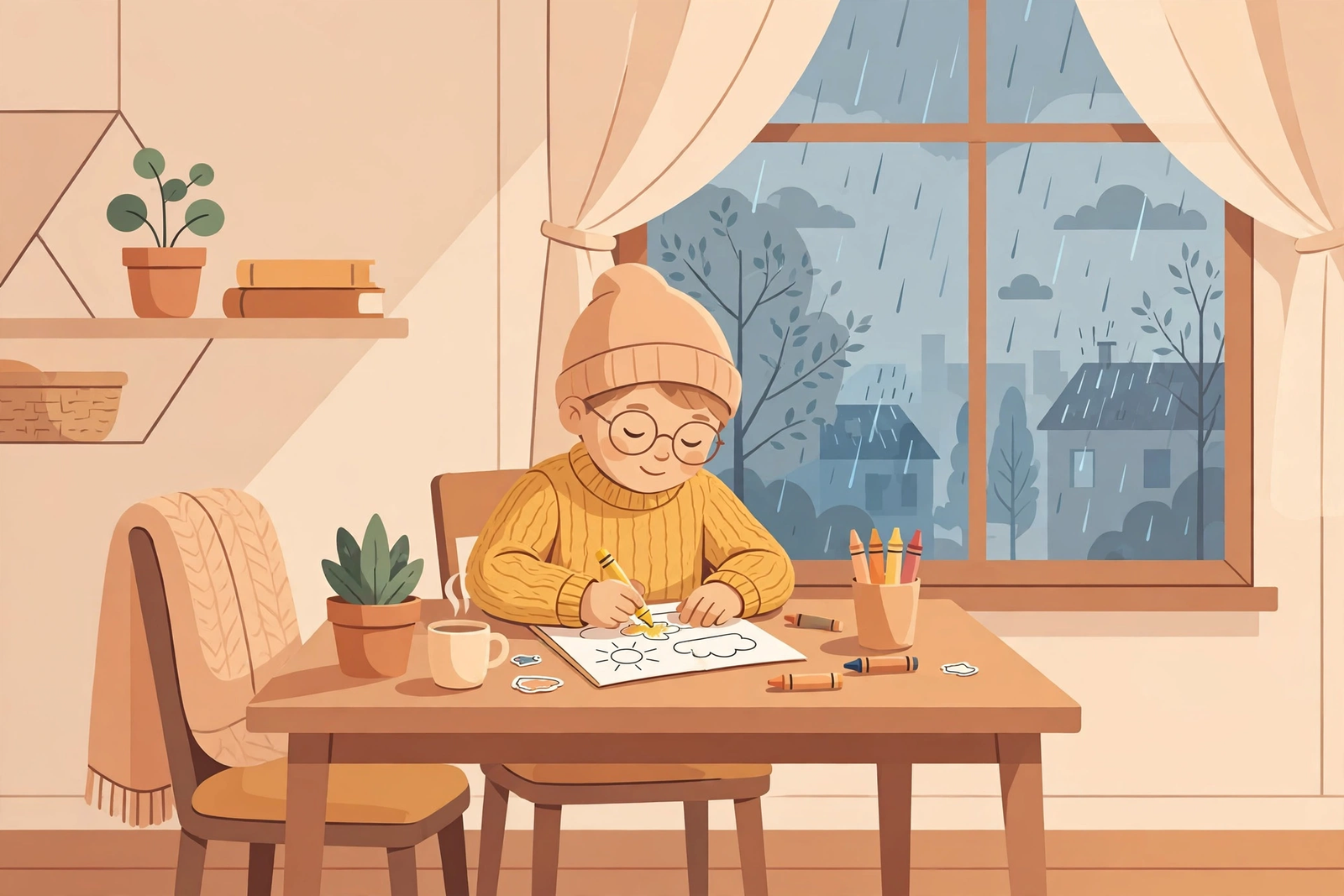
The "best" page is the one that fits where you are.
Any coloring page can be a good one — but the wrong page in the wrong place turns a calm activity into a frustrated one. A detailed sheet is bliss on a slow Sunday and a disaster in a bumpy car. Here's how to match the page to the moment so it does what you actually need it to do: fill time, settle nerves, or spark a bit of creativity.
Rainy day at home: go big and detailed
When you're home with hours to fill and a flat table to work on, this is the time for detail. Larger scenes and busier pages reward the extra time and keep a child (or you) absorbed for longer. Reach for a fantasy scene with lots of elements, or if it's grown-ups coloring, a full mandala that invites slow, careful work. A stable surface and good light mean fine details aren't a struggle, so lean into pages you'd skip elsewhere.
Road trip: simple, self-contained, spill-proof
In a moving car, three things matter: the surface is unstable, the light is uneven, and dropped supplies vanish forever. Choose simpler pages with bold outlines and fewer tiny regions, so a wobble doesn't ruin the picture. Bring a hardback book or clipboard as a lap desk, and swap loose crayons for a small set of chunky ones or twist-up pencils that won't roll. An easy animal page with big shapes is ideal — satisfying to finish, forgiving of bumps.
Waiting room: quick wins and quiet supplies
Waiting rooms are unpredictable — you might have five minutes or fifty. Pack a couple of short, high-reward pages a child can finish fast, so there's a sense of completion even if you're called in early. Keep the supplies quiet and low-mess: colored pencils over squeaky markers, and skip anything that needs water or sharpening. A finished page also gives a nervous kid something to be proud of right when they need the distraction most.
Rule of thumb: more time and a flat surface means more detail; less time or a moving surface means bolder, simpler pages.
Match difficulty to attention, not just age
Every drawing page here is labelled Easy, Medium, or Detailed, and you can filter a whole category by difficulty in one tap. Use those labels as a proxy for how much attention the moment allows, not only the child's age. A capable seven-year-old in a tired, end-of-day mood will do better with an Easy page than a Detailed one — and be happier for it. We break down the age labels themselves in coloring pages for toddlers.
A small kit that covers every moment
If you keep one grab-and-go pouch stocked, you're ready for all three situations: a few printed pages in a mix of difficulties, a dozen chunky colored pencils, a clip or small clipboard, and a zip bag to carry finished art home flat. Print a couple of extra copies of the simplest pages — the ones that always get requested — so you never run out mid-trip. For choosing what goes in the pouch, our guide to crayons vs pencils vs markers helps you pick supplies that travel well.
Once you start thinking in terms of "what does this moment allow," picking a page takes seconds. Browse by difficulty in any category and build a little stash for the next rainy afternoon, long drive, or unexpected wait.