Coloring Pages for Toddlers: What "Age 3–6" Really Means
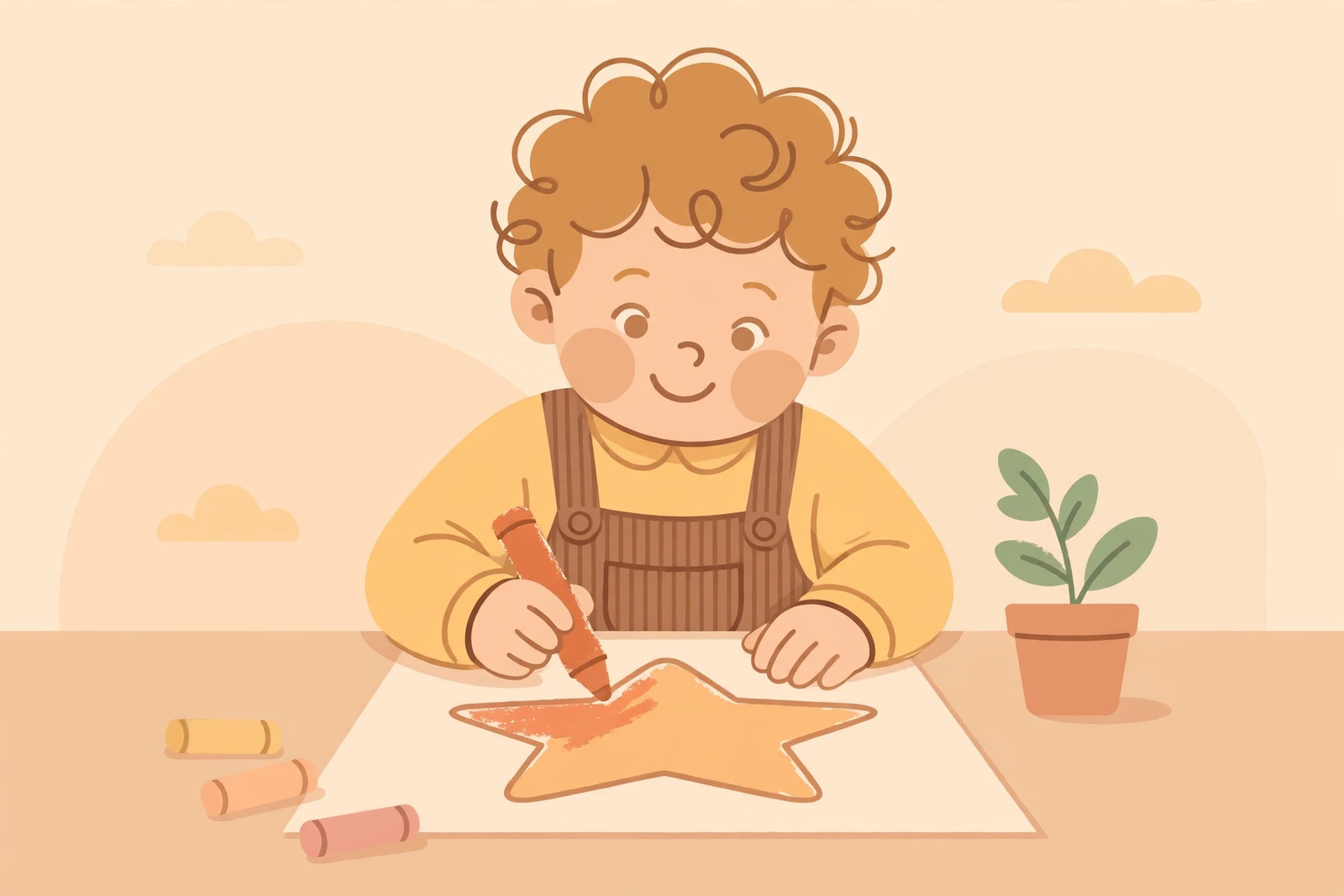
Age labels are a guide, not a gate — read the page, not just the number.
You see "Ages 3–6" on a coloring page and reasonably assume it means your three-year-old is all set. Sometimes yes, sometimes not quite — because age labels describe a typical range, and toddlers develop at wildly different paces. Here's how to read those labels, match a page to what a little hand can actually do, and avoid the meltdown that comes from a page that's secretly too hard.
What the age label is really telling you
An age band is shorthand for three things: how big the shapes are, how many separate regions there are, and how much fine control the page expects. "Ages 3–6" on our pages means bold outlines, a handful of large areas, and a recognizable subject — a page a preschooler can feel proud of. It is not a test. If your just-turned-three-year-old is still scribbling joyfully across the whole sheet, that's completely normal and exactly what they should be doing.
The stages inside "3–6"
That range actually covers several coloring stages. Around 2–3, children scribble with big arm movements and don't aim for lines yet. Around 3–4, they start filling a shape roughly, often overshooting the edges. Around 4–5, staying inside the lines becomes a goal they can sometimes hit. By 5–6, many can color a simple picture neatly and choose "correct" colors. All of these belong under one age label — so pick the page for the stage, not the birthday.
Match the page to what the child is doing now: scribbling means huge open shapes; aiming for lines means bold outlines with a few big regions.
How to pick a page that fits
Look for three green flags on a toddler page: thick outlines a crayon can't accidentally cross without you noticing, large open areas that fill quickly so the child sees progress, and a clear, familiar subject they can name. Our Cute Puppy and other easy animal pages are built exactly this way. Filter any category to "Easy" and you'll see the toddler-friendly options first.
Set them up to succeed
The page is only half of it. Chunky crayons suit small hands better than thin pencils, a single page taped down stops it sliding, and starting with them — "shall we do the ears?" — models how coloring works without taking over. Keep sessions short; a toddler's focus is measured in minutes, and stopping while it's still fun means they'll want to come back. For choosing supplies at this age, our crayons vs pencils vs markers guide lands firmly on crayons.
Let go of "neat"
The biggest favour you can do a toddler is to stop caring about staying in the lines. Coloring at this age builds grip strength, hand-eye coordination, and color recognition — every one of which happens whether or not the puppy ends up purple and out of the lines. Praise the effort and the choices, not the tidiness, and coloring stays something they love rather than something they can fail at.
Pick a page for where your child is today, hand over the crayons, and keep it light. Start with an easy animal and let the birthday number take a back seat to the fun.