Mandala Coloring and Focus: What the Research Actually Says
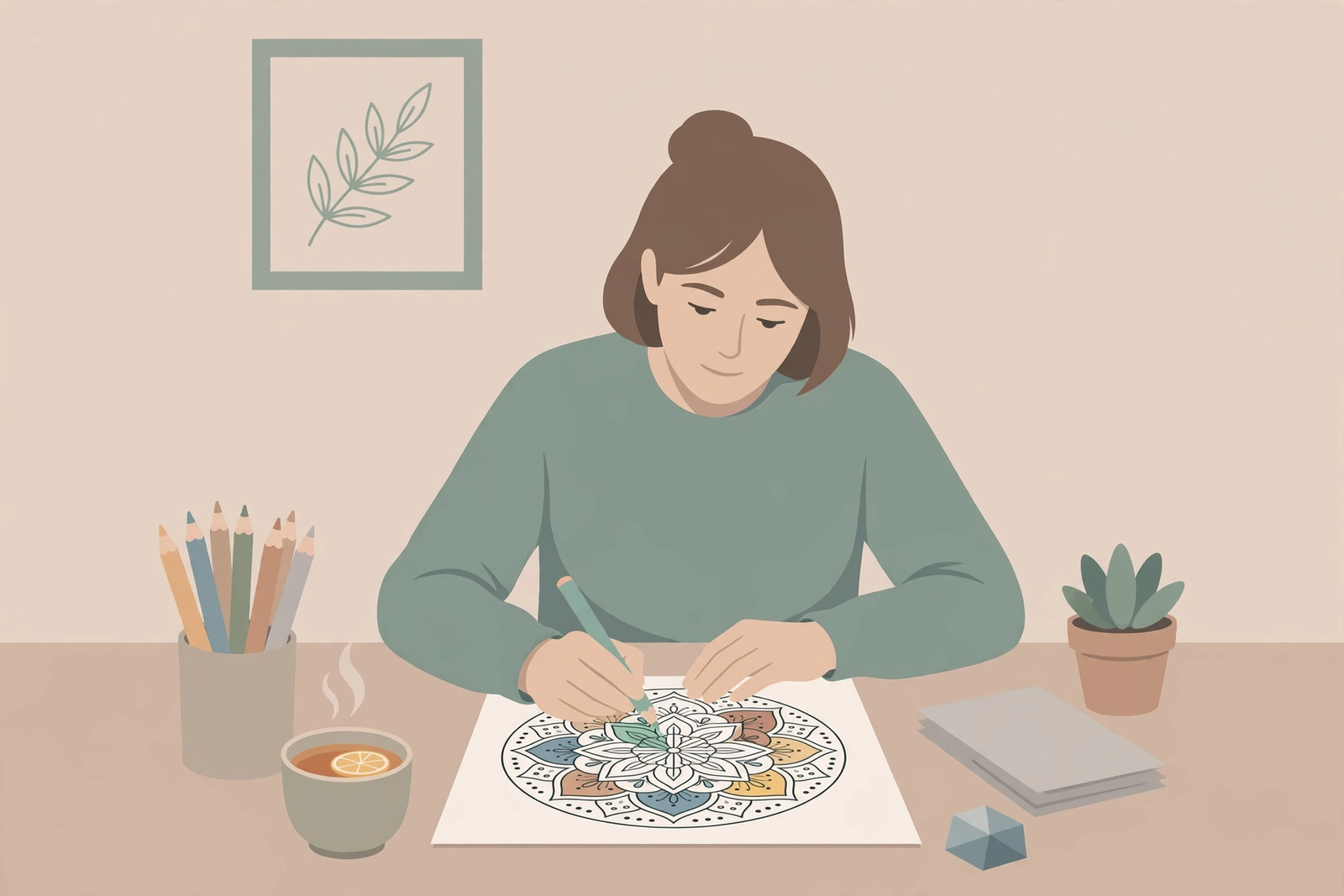
Coloring feels calming to many people — here's the measured version of why.
Search "coloring for anxiety" and you'll find a lot of confident claims. The reality is gentler and more honest: there's a modest but real body of research on coloring and mood, mandalas turn up in several of those studies, and the findings are encouraging without being miraculous. This is an informational overview, not medical advice — if you're dealing with a health concern, a qualified professional is the right person to talk to. With that said, here's what the studies tend to show.
The often-cited starting point
A frequently referenced set of experiments in the mid-2000s asked people to color a structured mandala, color a plain shape or free-form area, or just sit, after a mild anxiety-inducing task. Coloring the structured mandala was generally associated with a bigger drop in reported anxiety than free coloring or doing nothing. It's a small study, and later work has produced mixed results — but it planted the idea that structure might matter, not just the act of coloring.
Why structure might help
The leading explanation is simple: a detailed, symmetrical pattern gives your attention a clear, low-stakes place to rest. There's no decision about what to draw, only gentle choices about color, and the repetition of filling matched regions can be quietly absorbing. Psychologists sometimes describe this as a mild "flow" state — engaged enough to occupy the mind, easy enough not to stress it. A mandala's symmetry lends itself to this especially well, which is likely why it shows up in the research more than a random doodle.
The honest summary: coloring structured patterns is associated with short-term drops in self-reported anxiety in several small studies. That's a real, modest finding — not a cure, and not a substitute for care when it's needed.
What the research does not claim
It's worth being clear about the limits. These studies typically measure short-term, self-reported mood right after coloring, in small groups, often students. They don't show that coloring treats clinical conditions, and they're not consistent enough to promise a specific result for any individual. Anyone selling coloring as a medical treatment is overstating what the evidence supports. The sensible takeaway is smaller and still worthwhile: for a lot of people, it's a pleasant, low-cost way to decompress.
How to get the calming version of coloring
If relaxation is your goal, a few things stack the odds in your favor. Pick a detailed but not overwhelming pattern, put your phone out of reach, and treat it as process rather than product — the aim is the twenty quiet minutes, not a gallery-worthy result. Colored pencils suit this better than markers because they invite slow, deliberate work. Many people find coloring the same motif repeatedly, ring by ring, the most settling approach.
It's not only for adults
Children benefit from the "somewhere to put my attention" effect too, just with simpler patterns. A busy child at the end of the day can settle with a bold, medium-difficulty page as easily as an adult with a mandala. If you're choosing pages for that reason, our guide to picking the right page for the moment pairs well with this one.
So: is mandala coloring good for focus and calm? The measured answer is that it plausibly helps many people relax in the short term, the evidence is promising but limited, and the best way to find out is to try a quiet session yourself. Print a mandala, give it twenty unhurried minutes, and see how you feel afterward.